Leadership · September 30, 2026 · 6 min read
Blockbuster and the Quiet Window to Reinvent Your Business
Blockbuster was offered Netflix for $50 million, then nearly beat it years later. What closed its window, and how to tell if yours is still open.

Cross-border CEO, operator and author
In brief
- 1Blockbuster's window to reinvent opened twice, in 2000 and again from 2004 to 2007, and both times it closed while the business still looked healthy.
- 2A very profitable line that customers resent, like Blockbuster's $800 million in late fees, is one of the clearest signs the window is narrowing.
- 3Run the new-CEO test and a company-wide premortem in a good year, and put a date on every strategic option before it stops being affordable.
Most leaders I meet believe they have time. Plenty of options, plenty of decisions still to make. That belief is reasonable right up to the day the options stop existing, and the strange thing is that nobody hears that day arrive.
Every business has a silent window of time for reinvention. At first, no one sees the signs.
The window is silent because everything looks healthy while it is open. Results keep coming in, cash flows, the indicators say all is well, and precisely because of that, nobody moves. Why touch what is working? The most famous example of this is Blockbuster, and the popular version of the story gets the important part wrong.
The $50 million offer
In 2000, Netflix's co-founders Reed Hastings and Marc Randolph offered to sell their company to Blockbuster for $50 million. Netflix was a small, loss-making DVD-by-mail service. Blockbuster was the giant of home video, with about 9,000 locations and $6 billion in annual revenue at its peak. Netflix's former finance chief later said Blockbuster basically laughed them out of the office.1
It is easy to call that arrogance. I think it was something more ordinary. That same year Blockbuster collected $800 million in late fees,1 a charge Antioco himself later called a major customer irritant.2 Netflix's flat fee with no late charges was built to remove exactly that grievance.1 The most profitable habit in the business was also the weakest point in its relationship with customers. When one line pays that well and annoys people that much, it deserves the hardest look in the building.
Blockbuster had the chance to buy Netflix very cheaply, but chose, with very competent people, to keep optimizing what it already mastered.
$50M1
The price at which Netflix's founders offered their company to Blockbuster in 2000
$800M1
Late fees Blockbuster collected from its customers in 2000
$1.46B3
Debt listed in Blockbuster's Chapter 11 petition in 2010
The part of the story most people skip
Here is what the business-school version leaves out. Blockbuster did react. In 2004 it launched Blockbuster Online, and in 2006 it added Total Access, which let online subscribers swap discs in its stores. By the end of 2006 it had 2 million online subscribers, and in one quarter of 2007 Netflix lost 55,000 subscribers while Blockbuster kept growing. Randolph has called that period "very scary" for Netflix.1
The response was expensive. Each in-store exchange cost Blockbuster about $2, roughly $200 million went into an online business that wasn't yet profitable, and the company had carried about $1 billion of debt since its 2004 spin-off from Viacom.1 Carl Icahn, who held nearly 10 percent of the shares by 2005, opposed the online build-out and the end of late fees.1 After a fight over his bonus, CEO John Antioco left in March 2007, and his successor steered the company back toward its stores.1
- 2000
Netflix's founders offer the company to Blockbuster for $50 million. Blockbuster declines.1
- 2004
Blockbuster launches Blockbuster Online while carrying about $1 billion of debt from its spin-off.1
- 2006
Total Access lets subscribers swap discs in stores; online subscribers reach 2 million.1
- 2007
Antioco leaves after a fight with the board, and the strategy turns back to the stores.1
- 2010
Blockbuster files for Chapter 11, listing $1.46 billion of debt.3
- 2023
Netflix ships its last DVD on September 29, closing its own original business.4
Antioco later told his side of the fight in Harvard Business Review. He wrote that if the online strategy had not been "essentially abandoned," Blockbuster Online would have reached 10 million subscribers.2 Maybe. What is certain is that in September 2010 Blockbuster filed for Chapter 11 with $1.46 billion of debt and a plan to shrink its store base,3 in the same year Netflix passed 20 million subscribers.1
So the window didn't close once. It closed twice. In 2000, reinvention was cheap and nobody felt the need. Between 2004 and 2007 it was expensive but still possible, and it was shut by a governance fight inside a company that still believed it had time. By 2010 it was no longer transformation. It was survival mode.
Netflix closed its own first business
The contrast I find most useful is what Netflix later did to itself. In April 2023, co-CEO Ted Sarandos announced that after a 25-year run, and with the business continuing to shrink, the company would wind down its DVD service and ship its final discs on September 29, 2023.4 The red envelopes that beat Blockbuster, and that in Sarandos' words paved the way for the shift to streaming, were retired by the company that invented them.
That is what using the window looks like. You leave a business while it still works, because you can see where it is going, and you pay for the move out of strength rather than out of a bankruptcy plan.
How to tell whether your window is still open
No instrument beeps when the window starts to close. There are habits, though, that help you notice earlier. These are the five tests I ask leadership teams to run, ideally in a good year.
Five tests for the window
Run the new-CEO test
In 1985, with Intel losing its memory-chip business to cheaper rivals, Andy Grove asked Gordon Moore what a new boss would do if someone took over and got rid of them both. "Get out of the memory business," Moore said. They did it themselves, at the cost of more than 7,000 jobs, almost a third of the workforce.5 Ask your team the same question and write down the answer.
Write the post-mortem in advance
Gary Klein's premortem asks a team to imagine that a plan has already failed and to list the plausible reasons why. Research he cites found that imagining an outcome has already happened improves people's ability to identify the reasons for it by 30 percent.6 Do it for the whole company: it is five years from now and we are gone. What killed us?
Find your late fees
Look for the revenue line customers resent most. If a competitor could win simply by removing it, you have found the place where your Netflix will start.
Put a date on your options
List the three strategic moves still open to you and, next to each, the date it stops being affordable: the cash, the talent and the customer goodwill it requires.
Protect the response from the next budget meeting
Blockbuster's online push did not die in the market. It died at the board table. Agree up front who funds the new model, for how long, and what result would justify stopping it.
The window that is open right now
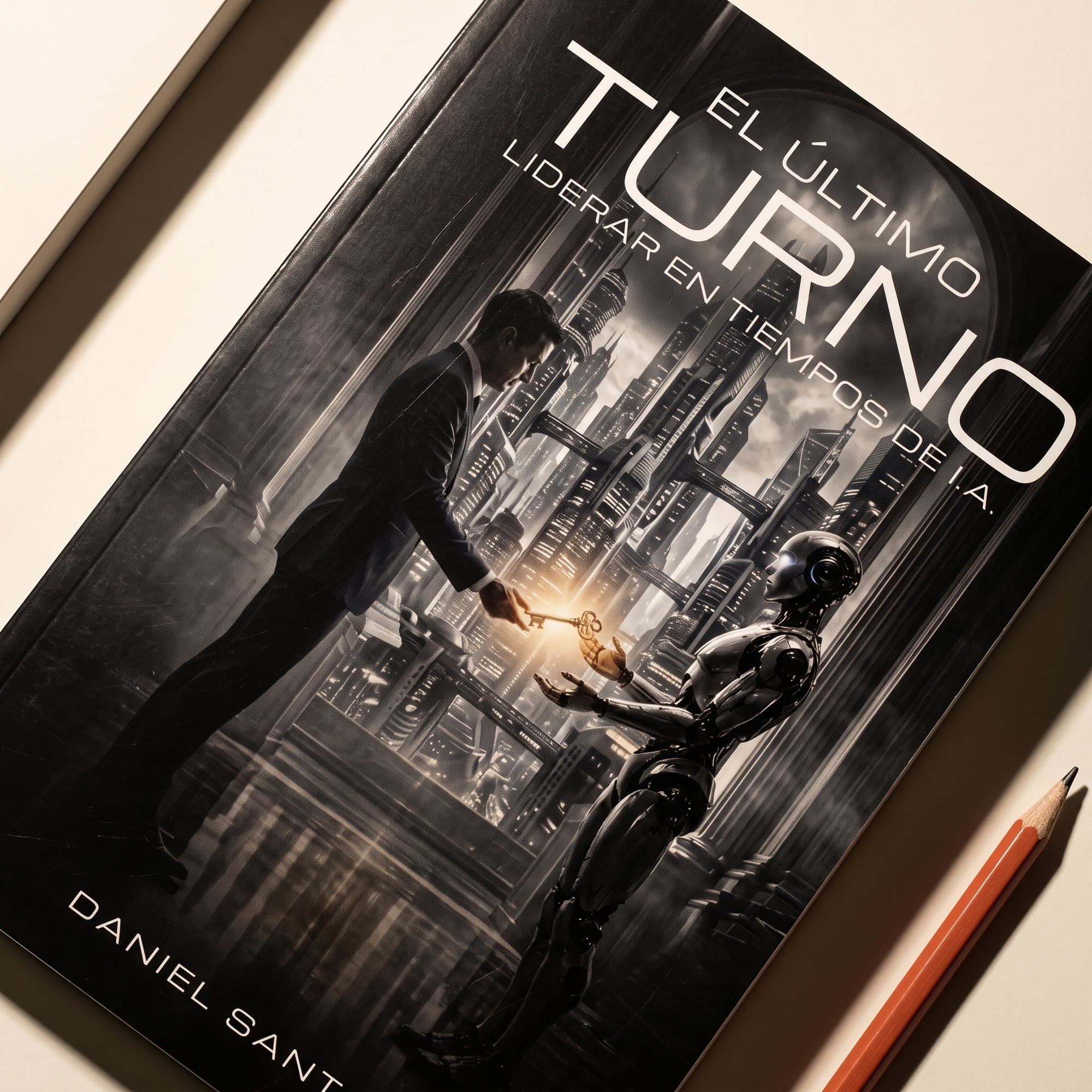
I wrote El Último Turno about the change I believe is opening the next window for most companies: artificial intelligence. The argument of the book is that AI doesn't destroy companies on its own. It exposes the strengths and weaknesses that were already there. If an organization has clarity, AI makes it far stronger. If it has confusion, AI makes that confusion unsustainable.
That is why I would not wait for an AI crisis to start the conversation. If you want help structuring it at board level, that is the work behind AI adoption and governance. If the problem runs deeper than technology, read why success turns toxic, the full essay on why profitable companies die, and the Strategic Entropy™ framework behind both.
So the real question isn't whether you still have time to reinvent yourself. The real question is: is this perhaps your last shift, and you don't know it yet?
Sources.
- 1CNBC Make It (Tom Huddleston Jr.), How Netflix almost lost the movie rental wars to Blockbuster, September 22, 2020.
- 2Harvard Business Review (John Antioco), How I Did It: Blockbuster's Former CEO on Sparring with an Activist Shareholder, April 1, 2011.
- 3The New York Times, DealBook, Blockbuster Files for Bankruptcy, September 23, 2010.
- 4Netflix (Ted Sarandos), Netflix DVD - The Final Season, April 18, 2023.
- 5NPR (Laura Sydell), Intel Legends Moore And Grove: Making It Last, April 6, 2012.
- 6Harvard Business Review (Gary Klein), Performing a Project Premortem, September 1, 2007.
Keep reading
- El Último TurnoDaniel's book on leading when AI changes the rules.
- Why Successful Companies Fail While the Numbers Look GoodHow success hardens into a blind spot, with Firestone, Intel and Nokia.
- AI Adoption & GovernanceBoard-level guidance for the window that is open now.
- Strategic Entropy™An early-warning scan for decaying assumptions.

Questions readers ask
Yes. According to Netflix co-founder Marc Randolph, as reported by CNBC, Netflix's founders offered to sell the company to Blockbuster in 2000 for $50 million and were turned down. Blockbuster later built a credible rival, Blockbuster Online and Total Access, but that strategy was reversed after a boardroom fight in 2007, and the company filed for bankruptcy in 2010.
Working through this right now?
Tell Daniel where your company stands. He reads every message himself and replies personally.