Strategic Entropy™ · October 19, 2026 · 6 min read
Why Thomas Cook Collapsed After 178 Years of Success
Thomas Cook had a famous brand, millions of customers and a business that still made money. What killed it was a model nobody would question.

Cross-border CEO, operator and author
In brief
- 1Thomas Cook didn't run out of brand or customers; it kept a model its customers had been leaving for years.
- 2The 2018 heatwave, Brexit and a failed rescue were the events; years of debt and an unquestioned model were the disease.
- 3The useful question isn't whether your company has strategic entropy, but how much time it leaves you and how you measure it.
There is a disease in companies that never appears on a financial statement. I open the video with that sentence because it sounds like a figure of speech, and it isn't one. Its symptoms look a lot like success: steady revenue, a respected brand, customers who keep coming back. That is exactly why so few leadership teams treat it.
I call it accelerated Strategic Entropy™: the silent loss of alignment between what your company believes is happening and what the market has already decided. The long version, with a method for measuring it, is in Why Profitable Companies Die. This piece is about a single case. History offers thousands, and this one shows every symptom.
The company that started the package trip
On 5 July 1841, Thomas Cook organized a day trip by train from Leicester to Loughborough for members of the temperance movement. Historians treat it as his first step toward the package holiday.1 In my reading, the company he built went on to invent modern organized tourism as we know it. It lasted 178 years.

- 1841
Thomas Cook's first organized excursion: a rail day trip from Leicester to Loughborough.1
- 2007
Thomas Cook merges with MyTravel. Its last chairman later told MPs the trouble basically all started there.2
- 2012
The UK business carries a legacy of 1,222 shops while more holidays are booked online.2
- 2019
In May, a half-year loss of £1.45 billion, driven by a write-down of more than £1 billion tied to the 2007 merger.3
- 2019
On 23 September, winding-up orders. The Official Receiver is appointed liquidator.4
None of it was sudden, and none of it was a mystery. Three weeks after the collapse, the House of Commons business committee questioned the former chairman, chief executive and board members, and they described the problem in their own words.2 Read the transcript and you find no villain. You find a model that kept paying just enough to postpone the hard decision.
It didn't lack a brand, customers or money
It didn't lack a brand, it didn't lack customers, it didn't lack money; it had too much confidence in a model that had already expired.
Thomas Cook ran the classic tour-operator model. It bundled the flight, the hotel, the transfer and the rep, flew many customers on its own airline, and sold the package through a chain of high-street shops. For decades that bundle was the strength. By the end it was the weight. In 2012 the UK business carried 1,222 shops. By 2019 the Nordic business had no shops left and sold entirely online, while in the UK 60 percent of volume still came through the stores.2
Customers were not waiting for anyone. The chairman told MPs that in 2011 only 20 percent of British holidaymakers bought their holiday online, and that by 2019 the figure was about 40 percent.2 One MP pointed out that the UK model had made an £11 million profit the year before, so it was working. The former chief executive replied that it was definitely not enough.2 That exchange is strategic entropy in two lines: a model that still makes money, and a management team that knows it isn't enough and can't replace it fast enough.
1,2222
UK shops in Thomas Cook's legacy estate in 2012
60%2
Share of UK volume still sold through shops at the end
£1.2B2
Interest and refinancing costs paid since 2012, in the former CEO's words
The money was there too, at least at the top line. What the debt took away was the freedom to use it. The former CEO told the committee the company had paid £1.2 billion in interest and refinancing costs since 2012, and that if even half had gone back into the business it could have moved faster.2 Debt like that is usually filed under financing. I file it under strategy, because every pound of interest is a pound that can't build the model that replaces the old one.

Even the shops weren't worthless. After the liquidation, Hays Travel bought 555 of them.4 The problem was never a single asset. It was the whole bundle around it, defended long after customers had started buying holidays a different way.
Disruption is the event, entropy is the disease
Most explanations of the end focus on a run of bad luck: the long, hot British summer of 2018, Brexit anxiety among holiday buyers, and a final request for £200 million of government support.2 All of that happened. But as one MP put it to the directors, those external factors applied to other companies as well, and they didn't collapse in the same way.2
Disruption is the event. Strategic entropy is the disease that allows the event to happen.
The events
- The 2018 heatwave, with late-summer flights left part-empty
- Brexit anxiety among holiday buyers
- A final request for £200 million of support
- A rescue that fell apart on the last weekend
The disease
- Debt from a 2007 merger that crowded out investment
- A shop estate built for customers who were moving online
- A bundled model that nobody was allowed to question
- Profitable years that postponed the hard decisions
That distinction is the one I care about. Disruption gets the headlines because it has a date. Entropy doesn't. It builds up in the years when results are good enough to avoid the uncomfortable conversation, which is why the trap so often closes on companies that are winning.
The more you win, the fewer questions you ask
In the video I put it as a trade: the more you win, the fewer questions you ask. Thomas Cook's directors were not careless people. They ran a business that had worked for longer than any of them had been alive, and every decent season was another argument for continuity. When a company stops asking uncomfortable questions, it doesn't stop changing. It ages faster, and it ages without noticing.
I learned this in my own company, which I describe in the longer essay. We were excellent at what we did, right up to the point where the client no longer wanted it. Of the roles in my piece on what a CEO can't delegate, the one that could have bought Thomas Cook years is the hardest: moving money away from the business that still pays the bills.
How much time do you have left?
The question isn't whether your business has strategic entropy. Of course it does. Every company that has been successful for long enough carries some. The questions that matter are the three I close the video with.
The question is: how much time do you have left? How are you measuring it? What are you doing about it?
Measure it before the event does
Write the model down
Describe in two sentences how you make money today, and add the year that description was last fully true. If you hesitate over the year, start there.
Find your 60 percent
Work out the share of revenue that still comes through the channel, format or customer group your newest customers use least. For Thomas Cook, it was the shops.
Price your debt in strategy
Add up what interest and refinancing will cost over the next three years, then list the investments that money would otherwise fund.
Score it twice
Ask the leadership team and, anonymously, people two levels down how exposed the model is. The gap between the two answers is the most honest number you'll get.
Separate events from causes
Whenever the board discusses a bad quarter, write the event in one column and the condition that made it dangerous in the other. Then act on the second column.
Thomas Cook's last day of trading was Monday, 23 September 2019, with an estimated 150,000 customers overseas who had to be brought home.5 The condition that made that day possible had been visible for a decade. If you want help reading the signs in your own business while there is still time to act, that is the work I do through operator-led execution, and it is the argument of Designed to Survive.
Sources.
- 1Historic UK (Shona Parker), Thomas Cook, May 3, 2021.
- 2House of Commons Business, Energy and Industrial Strategy Committee, Oral evidence: Thomas Cook (former directors), October 15, 2019.
- 3Travel Weekly, Thomas Cook Group losses plunge to £1.45bn, May 16, 2019.
- 4GOV.UK (The Insolvency Service), Thomas Cook: information for customers, employees, creditors and shareholders, September 23, 2019.
- 5National Audit Office, Investigation into the government's response to the collapse of Thomas Cook, March 19, 2020.
Keep reading
- Why Profitable Companies DieThe full essay on Strategic Entropy™, the Perception Gap and the Budget Test.
- Strategic Entropy™An early-warning scan for the assumptions your success depends on.
- The Six Things a CEO Can't DelegateIncluding the hardest one: moving money away from what still works.
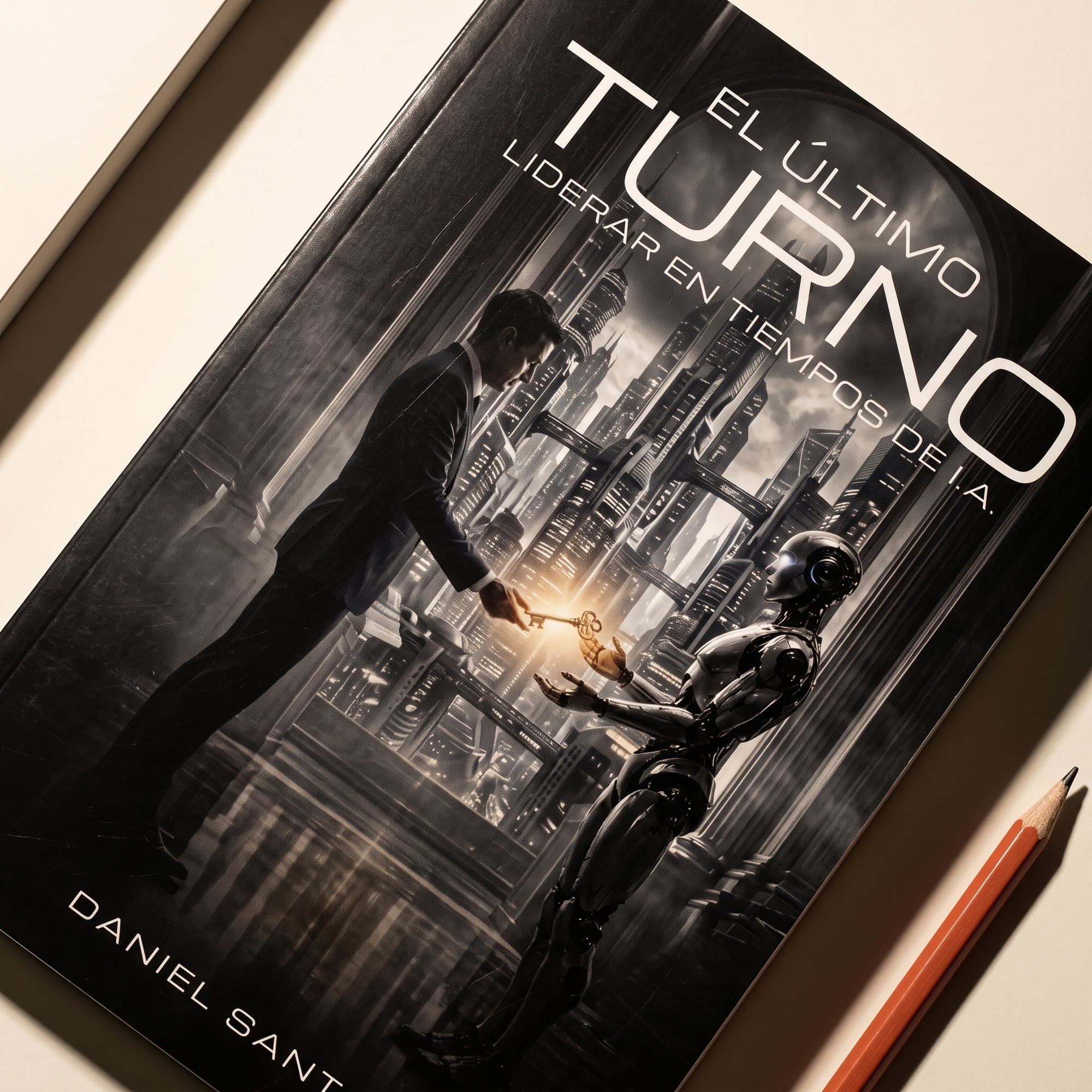
- Designed to SurviveDaniel's book on how to stop defending the past.


Questions readers ask
The immediate trigger was a failed rescue in September 2019, after a hard 2018 summer and Brexit uncertainty. The deeper causes, described by its own former directors to a House of Commons committee, were heavy debt dating back to the 2007 merger with MyTravel, about £1.2 billion of interest and refinancing costs after 2012, and a UK model still built around high-street shops while customers moved online.
Working through this right now?
Tell Daniel where your company stands. He reads every message himself and replies personally.