Operations & Risk · September 6, 2026 · 6 min read
The Hidden Cost of Insecurity for Companies in Mexico
Crime costs Mexican companies far more than what gets stolen. What the official data shows, where the cost hides, and six moves that put you back in control.
Cross-border CEO, operator and author
In brief
- 1Most of what crime costs a company in Mexico is not the theft itself but prevention, lost hours and investments that never happen.
- 2Official surveys rank insecurity among the top concerns of Mexican businesses and economists, so a plan that ignores it is incomplete.
- 3Map risks, diversify routes and suppliers, protect data, digitize, review insurance and rehearse continuity, with a number attached to each.
There is a cost that appears on no line of the income statement and still shows up in most of them. Insurance premiums that rise at renewal. Delivery routes that run longer to avoid a stretch of highway. A plant manager who won't move his family to the city where you need him. An investor who asks one more question about security and then goes quiet. Everyone in the room knows what it is. Few people say it out loud.
What nobody tells you out loud, but everyone is thinking: insecurity has a price, and it is also killing your company's profitability.
I want to talk about it without drama, because drama doesn't help anyone run a company. The useful question is how much insecurity costs your business, where that cost hides, and which part of it you can control. In the reel I put it this way: you can't control insecurity outside, but you can control what happens inside your company and how you prepare.
What the official numbers say
Mexico's statistics institute, INEGI, asks businesses directly. In its latest business victimization survey, 27.2 percent of the country's business units, about 1.3 million establishments, were victims of at least one crime in 2023, up from 24.6 percent in 2021. Extortion was the most frequent crime, followed by robbery of goods, cash or supplies, and by petty theft.1
27.2%1
of Mexico's business units were victims of at least one crime in 2023
MXN 124.3 bn1
cost of insecurity and crime to businesses in 2023 (2018 pesos), 0.51% of GDP
90.3%1
of crimes against businesses went unreported or produced no investigation
Size doesn't protect you. The same survey found that 47.3 percent of large business units and 49.0 percent of medium ones were victims in 2023, against 26.3 percent of micro businesses.1 Larger operations simply have more exposure: more sites, more trucks, more people.
Other official sources point the same way. In the World Bank's 2023 Enterprise Survey of Mexican firms, 29.0 percent named crime, theft and disorder as their single biggest obstacle, against 6.9 percent across Latin America and the Caribbean.2 And when Banco de México asked private-sector economists in September 2026 which factors could hold back growth over the next six months, public insecurity was the most cited single factor, with 19 percent of responses.3
Read those numbers carefully and they say two things. The risk is real and widespread. It is also uneven: it changes by state, by sector, by route and by the way each company operates. That unevenness is where management can act.
Where the cost hides
The most revealing figure in INEGI's survey is not the losses. Of everything crime cost businesses in 2023, 54 percent was spending on prevention and 46 percent was the losses themselves.4 More than half of the bill is money spent so that something does not happen. Most of it went to the obvious: 26.0 percent of business units changed or added locks and 20.6 percent installed alarms or cameras, while only 5.0 percent bought insurance and 3.2 percent installed GPS tracking as preventive measures.4
I'm not only talking about your goods being stolen. I mean more expensive insurance, longer routes, lost customers, employees who don't want to travel, even lost investment.
Then come the costs no police report records. INEGI found that in 2023, because of crime, 15.1 percent of business units cancelled growth plans or investments, 19.8 percent cut production or sales hours and 6.0 percent cancelled distribution or sales routes.4 That is revenue that never got the chance to exist.
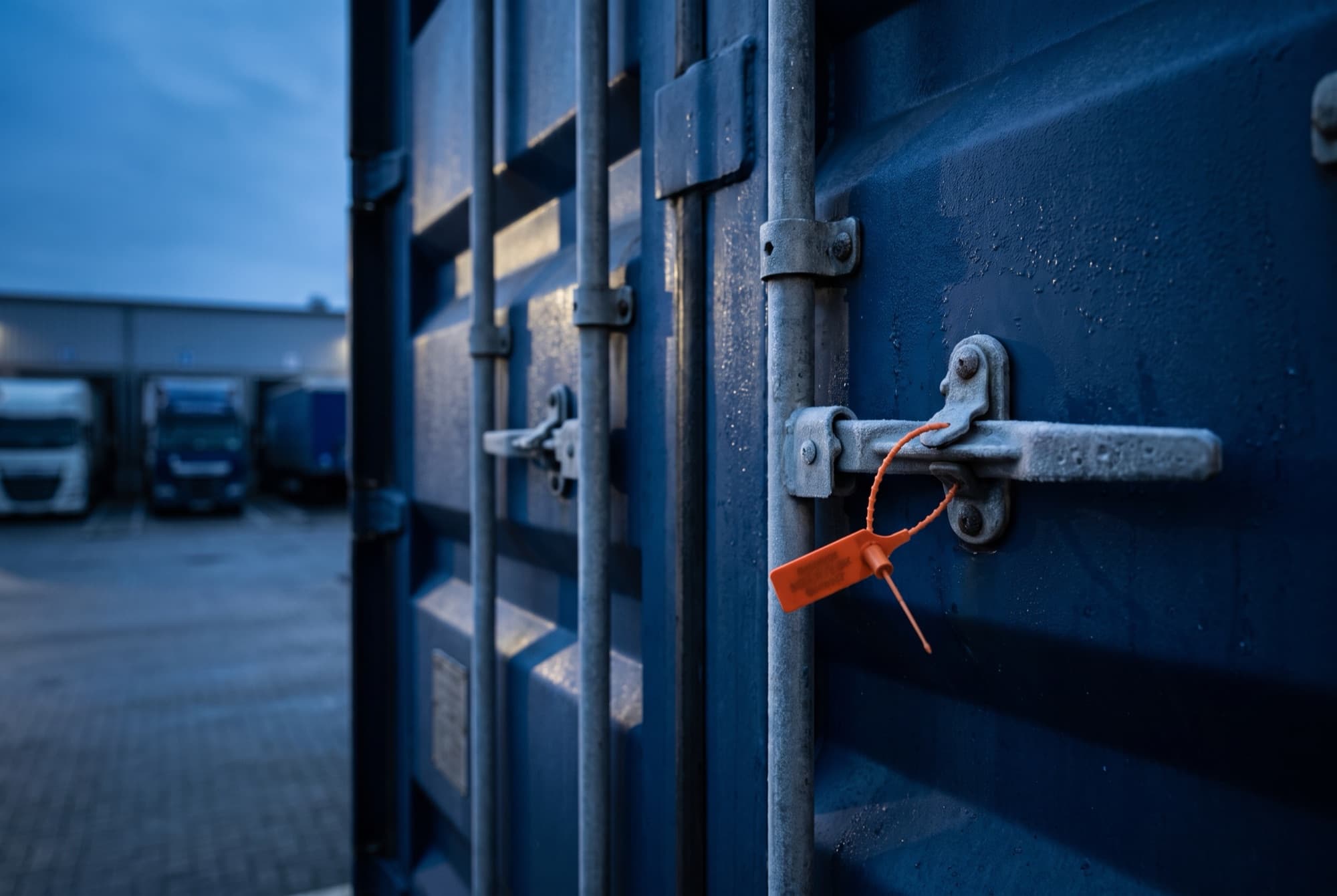
The route decision is not abstract. In 2018, Coca-Cola FEMSA closed its plant in Ciudad Altamirano, Guerrero, citing harassment by criminal groups. About three months later Grupo GEPP, PepsiCo's bottler in Mexico, temporarily closed its distribution center in the same city, saying the conditions needed to keep distributing were not in place.5 Large companies can step back from a city. A mid-sized supplier usually can't, so it has to redesign how it serves that market instead.
Six moves that put you back in control
Map your risks. Diversify suppliers and routes. Protect your information. Digitize processes. Review your insurance coverage closely. And build continuity and redundancy plans.
These are the six points I shared in the reel. None of them is new on its own. What makes them work is treating them as one system, putting a number on each, and reviewing them as seriously as you review sales.
The six moves, in practice
Map your risks
List every place where value sits or moves: plants, warehouses, cash points, trucks, people, data. For each, estimate how likely an incident is and what it would cost, using your own incident log and public data for your state and sector. Rank by expected cost, not by fear.
Diversify suppliers and routes
Avoid any single supplier, road or warehouse whose failure would stop the company. Keep an approved alternative for each critical input and a second route your drivers have actually driven.
Protect your information
Delivery schedules, payroll lists and executives' calendars are valuable to anyone planning a theft or an extortion call. Limit who sees them, secure the systems that hold them and train staff to spot fraud calls. NIST's free Cybersecurity Framework is a sensible structure to start from.6
Digitize processes
Cash and paper create exposure and leave no trail. INEGI found that 19.9 percent of businesses stopped handling cash or cut it to a minimum because of crime.4 Electronic payments, digital proof of delivery and vehicle tracking also produce the evidence you will need later.
Review your insurance
Sit down with your broker and read the exclusions: cargo in transit, employee dishonesty, extortion, cyber. Ask what documentation a claim requires and build it into daily operations, because a policy you can't claim on only looks like protection.
Build continuity and redundancy plans
Decide in advance who decides what if a site closes for a week, a route is blocked or a manager receives a threat. Write it down, rehearse it once a year and keep a cash buffer sized to the longest disruption you can realistically face.
Stronger than the problem
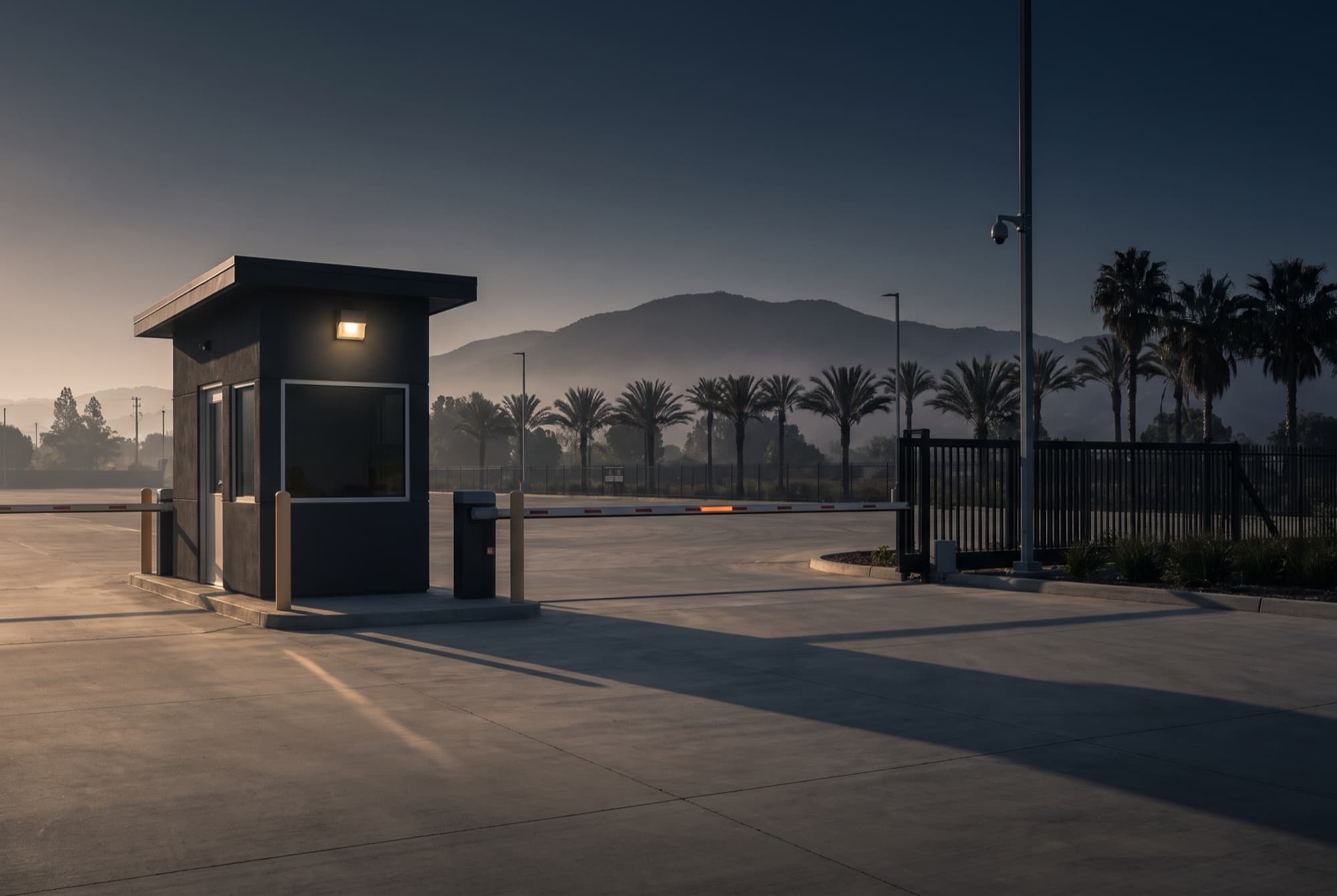
None of this makes a company immune. It makes the risk visible, priced and shared, which is what management can actually do. It also builds credibility. When we prepare a company to operate in Mexico, security sits in the plan next to tax, labor and logistics, not in a drawer. Where a company needs hands-on support, the security, investigation and logistics practice covers industrial security and logistics for companies operating abroad. Investors can tell a team that has measured its exposure from one that is hoping.
It is the same discipline I describe in Nearshoring Is Not the Same as Selling in the U.S.: location brings you close, preparation gets you in. And it connects to Strategic Entropy™, because the most dangerous assumption in any plan is the one nobody wrote down.
In the reel I said that no one is coming to the rescue. INEGI's data makes the same point without emotion: 90.3 percent of crimes against businesses in 2023 went unreported or produced no investigation.1 So the work falls to the company. Don't ignore the problem. Build a company that is stronger than the problem itself.
Sources.
- 1INEGI (Instituto Nacional de Estadística y Geografía), Encuesta Nacional de Victimización de Empresas (ENVE) 2024, press release 780/24, December 10, 2024.
- 2World Bank Enterprise Surveys, Mexico 2023 Country Profile.
- 3Banco de México, Encuesta sobre las Expectativas de los Especialistas en Economía del Sector Privado: Septiembre de 2026, October 1, 2026.
- 4INEGI (Instituto Nacional de Estadística y Geografía), ENVE 2024: Presentación ejecutiva.
- 5Expansión (with Reuters), La embotelladora de Pepsi confirma el cierre temporal en Ciudad Altamirano, June 13, 2018.
- 6National Institute of Standards and Technology (NIST), Cybersecurity Framework (CSF 2.0).
Keep reading
- Security, Investigation & LogisticsIndustrial security, reporting and logistics support for companies operating abroad.
- Nearshoring ProgramsHow Daniel plans a Mexico operation, risks included.
- A U.S. operation nearshores to MexicoWhat the move looks like step by step.
- Nearshoring Is Not the Same as Selling in the U.S.Location brings you close; preparation gets you in.



Questions readers ask
INEGI's 2024 business victimization survey estimates that insecurity and crime cost Mexican business units 124.3 billion pesos in 2023, measured at 2018 prices, or about 0.51 percent of GDP. Some 54 percent of that cost was spending on prevention rather than direct losses. The survey also found that 15.1 percent of businesses cancelled growth plans or investments because of crime, a cost no loss figure captures.
Working through this right now?
Tell Daniel where your company stands. He reads every message himself and replies personally.